

Introduction
The Chief Justice of India (CJI) oath ceremony is more than a constitutional formality — it is a moment that symbolizes continuity, independence, and the evolving vision of India’s judiciary. Each oath-taking ceremony marks the beginning of a new chapter in the country’s legal and constitutional journey. As a new Chief Justice of India assumes office, expectations rise around judicial reforms, constitutional interpretation, and the safeguarding of democratic values.
This oath ceremony marks not just a change in leadership but the dawn of a new judicial era shaped by contemporary challenges, public trust, and constitutional responsibility.
The Oath Ceremony at Rashtrapati Bhavan
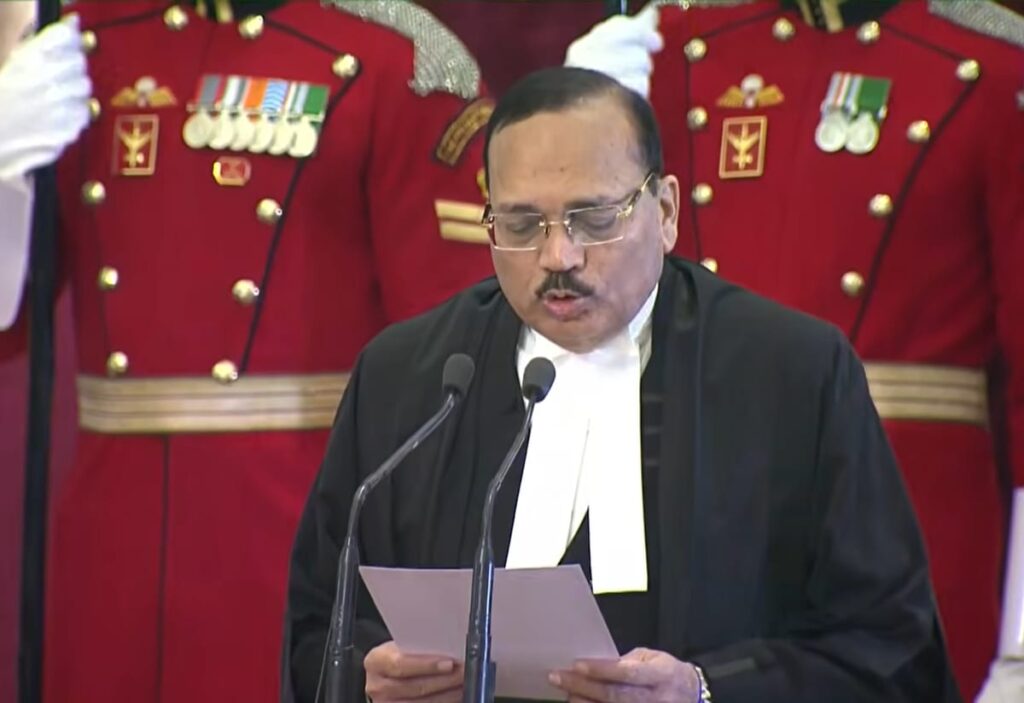
The oath of office was administered in an official function held at the majestic Rashtrapati Bhavan. The new Chief Justice appeared in traditional judicial robes, reading the oath with sincerity and determination.
A Glimpse Into the Ceremony
- The Chief Justice stood before the President of India to take the solemn oath.
- The event was attended by senior judges, legal officers, and high-ranking officials.
- Uniformed guards and ceremonial officers added grandeur to the occasion.

Significance of the Ceremony
This oath underscores the constitutional duty entrusted to the Chief Justice—protecting the integrity of the judiciary and ensuring justice for all.
Tenure Until 2027
The new Chief Justice will serve until February 9, 2027, making this tenure crucial for addressing many long-standing judicial challenges.
Expected Areas of Focus
The Indian legal system is one of the largest in the world, with millions of cases pending. The new CJI is expected to bring several reforms.
Reducing Case Backlogs
One of the most important priorities is likely to be the reduction of pending cases in:
- District courts
- High Courts
- Supreme Court
This would allow faster justice delivery, especially in civil and criminal matters.
Digital Transformation of the Judiciary
Expected initiatives include:
- Expansion of virtual hearings
- Digital case tracking systems
- Upgraded e-court infrastructures
- Better accessibility for citizens in remote areas
Key Priorities in the New Judicial Era
Judicial Efficiency and Case Pendency
One of the most pressing challenges is reducing the backlog of cases. Emphasis is expected on:
-
Fast-tracking long-pending cases
-
Strengthening lower courts
-
Leveraging technology for case management
Technology and Digital Courts
The judiciary is increasingly embracing digital transformation. The new era is likely to see:
-
Expansion of e-courts
-
Virtual hearings
-
AI-assisted legal research
-
Digitization of records
Protection of Fundamental Rights
The Chief Justice plays a vital role in safeguarding constitutional freedoms, especially in cases involving:
-
Free speech
-
Privacy
-
Equality
-
Federalism
Judicial Independence
Maintaining a clear balance between the judiciary and other branches of government remains a defining priority.
Symbolism Beyond the Ceremony
The oath ceremony is rich in symbolism. It reflects:
-
Continuity of constitutional governance
-
Respect for democratic institutions
-
Stability of the legal system
For the legal fraternity, it represents renewed commitment to justice. For citizens, it reinforces faith in the judiciary as the guardian of rights.
Impact of the Chief Justice of India on the Legal System
The tenure of the Chief Justice of India influences:
-
Judicial appointments and transfers
-
Interpretation of constitutional law
-
Direction of public interest litigation
-
Relationship between judiciary and executive
The leadership of the Chief Justice of India sets the tone for the entire judicial ecosystem.
Key Dignitaries Who Attended
The event saw the presence of political and administrative leaders from across the country.
National-Level Leaders
The ceremony was attended by:
- Union Ministers
- Governors
- Parliament members
- Senior bureaucrats
Presence of State Leadership
Chief Ministers from multiple states were also present, including the Chief Minister of Telangana, who extended congratulations and expressed hopes for judicial progress.
Importance of Such Attendance
Their presence at the ceremony shows the unity between the pillars of democracy—legislative, executive, and judiciary.

Why This Appointment Matters for India
Every new Chief Justice brings fresh vision, experience, and priorities to the judicial system. This particular appointment carries extra significance due to ongoing national discussions surrounding:
- Legal reforms
- Judicial transparency
- Efficient court functioning
- Public trust in the justice system
Strengthening India’s Constitutional Framework
The role of the Chief Justice extends beyond courtroom decisions. It includes:
- Managing the Supreme Court’s administrative functions
- Forming constitutional benches
- Guiding lower courts
- Advising on judicial policies
Public Expectations
People across the nation hope for:
- Faster judgment delivery
- Increased use of technology
- More accessibility for rural communities
- Strengthening of citizens’ legal rights
A Vision for the Future
With a long tenure ahead, the Chief Justice has the opportunity to leave a long-lasting impact on India’s justice system.
Challenges Facing the Chief Justice of India
Despite constitutional authority, the Chief Justice of India faces several challenges:
-
High case pendency
-
Judicial vacancies
-
Managing politically sensitive cases
-
Balancing speed with quality of justice
How the Chief Justice of India addresses these challenges defines the success of this new judicial era.
Conclusion
The Chief Justice of India oath ceremony is a powerful reminder of the judiciary’s enduring role in India’s democracy. As a new Chief Justice takes charge, the nation looks forward to a judicial era marked by fairness, efficiency, innovation, and unwavering commitment to the Constitution.
This moment is not just about leadership change — it is about reaffirming the rule of law and strengthening the foundation of justice for generations to come.